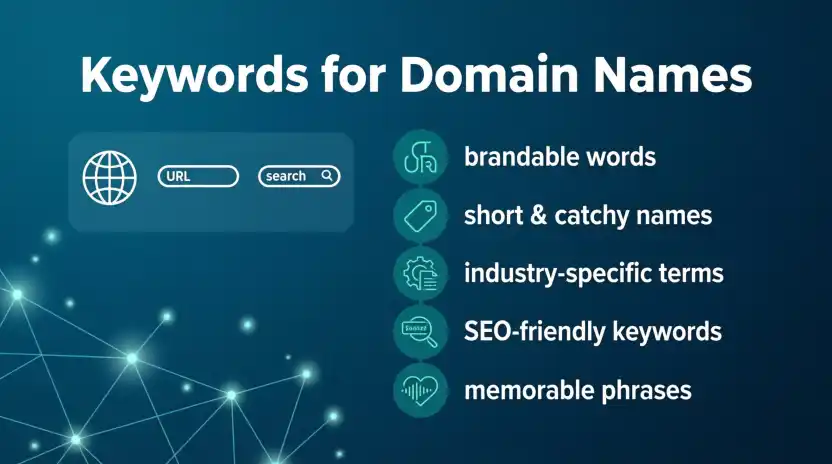
Keywords for domain names are useful search terms that can help you discover a memorable, relevant, and brand-friendly domain name. They can be based on your niche, audience, product, service, location, or brand style.
What Are Keywords for Domain Names?
Keywords for domain names are words or phrases related to the topic, business, product, or audience that a domain will represent. They can help you brainstorm domain ideas that are easy to understand and connected to your website’s purpose.
Common Types of Domain Keywords
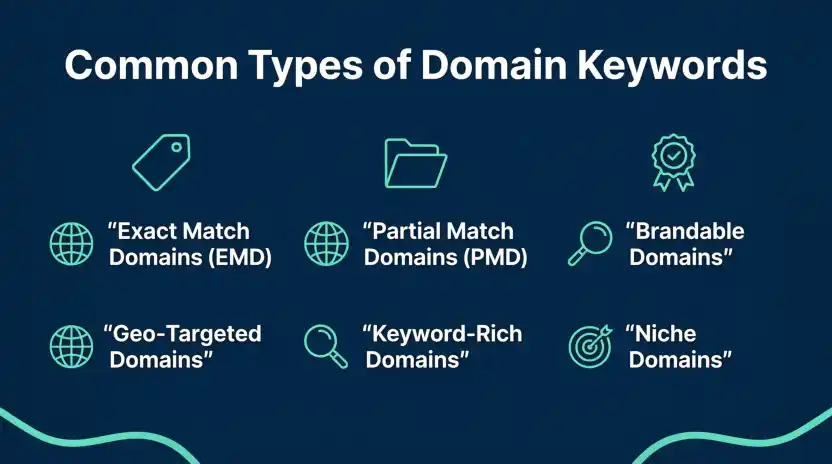
- Industry-related words
- Product or service terms
- Audience-focused words
- Location-based terms
- Descriptive words
- Brand-style words
- Short and memorable words
- Niche-specific phrases
How to Find Keywords for Domain Names?
Start by identifying the main topic of your website. Then create a list of words connected to that topic and combine them in different ways.
Use Your Main Topic
Write down the main word that describes your website.
For example, a website about pets might start with words such as:
- Pets
- Animals
- Paws
- Pet
- Fur
- Care
Add Related Words
Next, add words that describe the site’s purpose, style, or audience.
Examples include:
- Guide
- Hub
- World
- Zone
- Care
- Pro
- Life
- Daily
- Central
Combine Words Naturally
Mix the words to create domain ideas. For example:
| Main Keyword | Related Word | Possible Combination |
| Pet | Guide | PetGuide |
| Name | Hub | NameHub |
| Travel | World | TravelWorld |
| Food | Daily | FoodDaily |
| Design | Pro | DesignPro |
Best Keywords for Domain Names
There is no single list of keywords that works for every website. The right terms depend on your niche and branding goals.
Short Keywords
Short words are often easier to remember and type.
Examples:
- Name
- Lab
- Hub
- Pro
- Go
- Now
- Guide
Descriptive Keywords
Descriptive words make the website’s topic clearer.
Examples:
- Names
- Travel
- Finance
- Fitness
- Recipes
- Design
- Marketing
Brandable Keywords
Brandable terms can be useful when you want a domain that feels unique rather than purely descriptive.
Examples include combinations such as:
- Name + Lab
- Brand + Hub
- Topic + Pro
- Niche + World
What Makes a Good Domain Keyword?
A useful domain keyword should fit the website and be easy for visitors to understand.
Easy to Spell
Choose words that people can type without confusion. Avoid unusual spellings unless they are part of the brand.
Easy to Remember
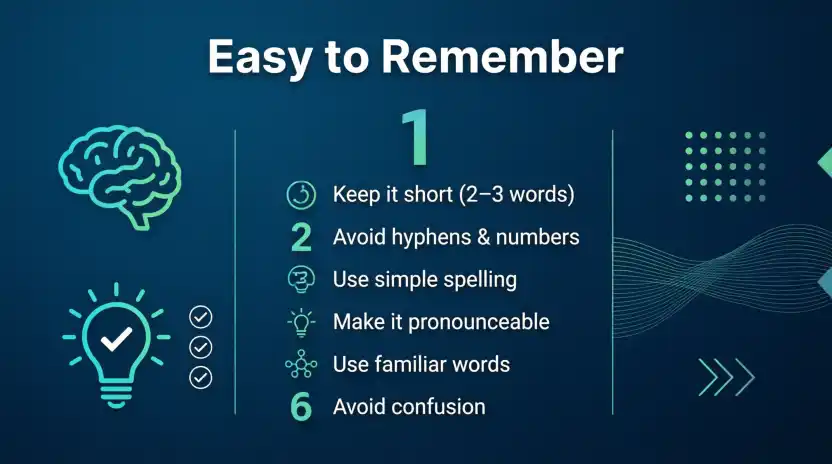
Simple combinations are usually easier to recall than long strings of words.
Relevant to Your Niche
The keyword should have a clear connection to your website’s content, product, service, or audience.
Flexible for Branding
If you plan to expand your website later, avoid choosing a term that is too narrow.
Domain Keyword Ideas by Website Type
Different websites can use different keyword patterns.
Business Websites
Business domains can combine an industry term with a brand-style word.
Examples:
- Market
- Solutions
- Group
- Works
- Studio
- Pro
Blog Websites
Blogs can use words that describe their content or publishing style.
Examples:
- Guide
- Daily
- Journal
- World
- Stories
- Insights
Online Stores
E-commerce domains can use words related to shopping and products.
Examples:
- Shop
- Store
- Market
- Deals
- Goods
- Boutique
Niche Websites
Niche sites can combine a specific topic with a useful descriptive word.
Examples:
- TopicGuide
- TopicHub
- TopicWorld
- TopicCentral
- TopicDaily
How to Choose Keywords for Domain Names
A simple process can make domain brainstorming easier.
1. Define Your Website
Write one sentence explaining what the website does.
2. List Core Words
Create 10–20 words directly related to the topic.
3. Add Supporting Words
Add words that describe your brand, audience, or purpose.
4. Create Combinations
Combine the strongest words into short domain ideas.
5. Check the Domain
Before using an idea, check if the domain is available and if it creates confusion with an existing brand or website.
Mistakes to Avoid When Choosing Domain Keywords
Some domain ideas can look attractive but create problems later.
Using Too Many Words
Long domains can be harder to remember and type.
Choosing an Unclear Keyword
A keyword that has no obvious connection to your website may confuse visitors.
Copying Another Brand
Avoid domain ideas that are confusingly similar to established brands.
Limiting Future Growth
A very narrow keyword can become restrictive if your website expands into related topics.
FAQs About Keywords for Domain Names
1. What are good keywords for domain names?
Good keywords are relevant, simple, memorable, and easy to spell. The best choices depend on your website’s niche and purpose.
2. Should a domain name include keywords?
A keyword can help communicate what a website is about, but a domain does not need to contain an exact-match keyword. A memorable brand name can also work well.
3. How many keywords should a domain name have?
One or two strong words are often easier to remember than a long combination. Focus on clarity rather than adding many keywords.
4. Are short domain names better?
Short domains can be easier to type and remember, but relevance and brandability also matter. A slightly longer domain can still work if it is clear and easy to use.
5. Can I use niche keywords in a domain?
Yes. Niche keywords can make the topic of a website clearer, especially for focused blogs, resources, stores, or services.
6. Should I use exact-match keywords in my domain?
Not necessarily. Exact-match domains are one option, but they are not required. A distinctive and relevant brand name may give you more flexibility.
Conclusion
The best keywords for domain names depend on your website’s topic, audience, and branding goals.
Start with your main niche, add related words, create simple combinations, and check each domain carefully before choosing one.
Read more about!
- Cute Calico Cat Names: Adorable Ideas for Your Colorful Cat
- White Animal Names: 100+ Beautiful Ideas for White Animals
- Ranch Dog Names Girl: 150 +Sweet, and Country-Inspired Ideas

I’m Noah Wilson, a name enthusiast and writer at NamesProx. I enjoy researching and sharing creative, meaningful, and unique name ideas, from baby and pet names to character, fantasy, cultural, and business names. My goal is to make finding the perfect name simple, enjoyable, and useful for everyone.