Black gemstones are admired for their mysterious beauty, rich colors, and elegant appearance. Some have a deep, glossy black finish, while others show beautiful patterns, metallic flashes, or subtle shades of gray. These stones are popular in jewelry, crystal collections, and decorative designs.
If you are searching for a black gemstone for a ring, necklace, bracelet, or personal collection, there are many fascinating options. From classic Black Onyx and Obsidian to rare Black Opal and Black Diamond, this guide explores different black gemstones, their appearances, and their interesting features.
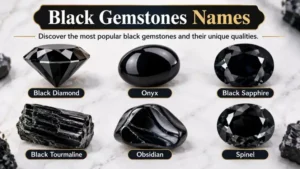
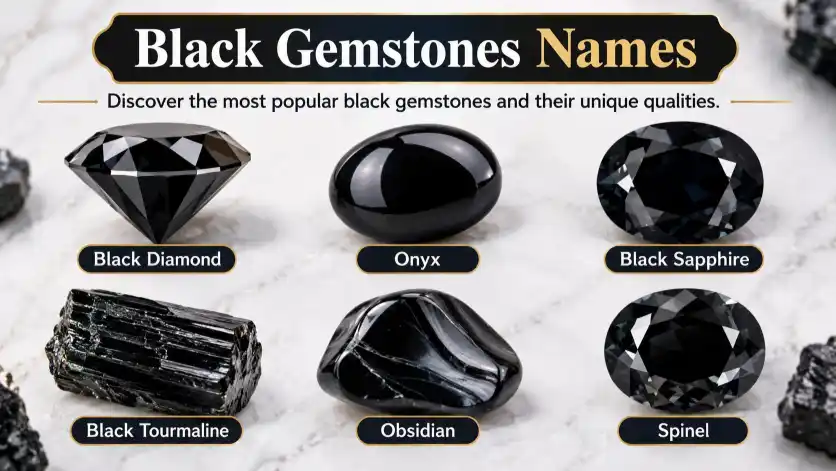
Popular Black Gemstones Names
These black gemstones are among the best-known choices for jewelry and collections. Each stone has its own appearance, properties, and appeal.
- Black Onyx – A variety of chalcedony known for its smooth, deep-black appearance.
- Black Obsidian – Natural volcanic glass with a glossy, dark surface.
- Black Tourmaline – A popular black mineral often used in jewelry and crystal collections.
- Black Diamond – A diamond with a black appearance, valued for its dramatic look.
- Black Spinel – A durable gemstone with a beautiful dark shine.
- Black Sapphire – A dark variety of corundum used in rings and other jewelry.
- Black Opal – A valuable opal with a dark body tone and colorful flashes.
- Black Agate – A variety of banded chalcedony that can appear black or nearly black.
- Jet – A lightweight organic gemstone formed from fossilized wood.
- Hematite – An iron oxide mineral with a metallic gray to nearly black appearance.
- Shungite – A carbon-rich black rock often used for ornaments and decorative objects.
- Nuummite – A rare metamorphic rock known for its dark color and shimmering mineral patches.
- Black Labradorite – A dark feldspar stone that may display colorful flashes.
- Black Moonstone – A dark feldspar variety sometimes showing a silvery or blue sheen.
- Black Jasper – An opaque variety of chalcedony that can occur in dark shades.
Rare Black Gemstones
If you want something unusual, rare black gemstones offer distinctive patterns, textures, and natural beauty.
- Nuummite – A rare Greenlandic metamorphic rock with golden and blue flashes.
- Black Fire Opal – A dark-bodied opal that may show bright flashes of color.
- Black Star Sapphire – A dark sapphire that can display a star-shaped optical effect.
- Black Star Diopside – A dark gemstone known for its four-rayed star effect.
- Black Pearl – An organic gem formed inside certain mollusks, often showing green, blue, or purple overtones.
- Black Ammolite – A rare fossil gem made from the shell of an extinct ammonite, sometimes with dark areas and iridescent color.
- Black Amber – A dark-looking variety of fossilized tree resin, often containing impurities or inclusions.
- Tektite – Natural glass formed during meteorite impacts; some varieties are dark brown or black.
- Moldavite – A green impact glass, not black, but sometimes included in dark gemstone collections.
- Indicolite – A blue tourmaline variety that can look very dark in certain lighting.
- Black Rutile Quartz – Quartz containing dark needle-like rutile inclusions.
- Black Enstatite – A dark mineral that may be used as a collector’s specimen.
- Stichtite in Serpentine – A decorative rock that can contain dark green and purple areas.
- Black Kyanite – A dark form of kyanite with a distinctive bladed structure.
- Black Andalusite – A dark, uncommon form of a mineral better known for its earthy colors.
Black Gemstones Used in Jewelry
Some black gemstones are especially popular for rings, earrings, pendants, and bracelets. Their dark appearance pairs beautifully with silver, gold, and other metals.
- Black Diamond – Often used in modern engagement rings and statement jewelry.
- Black Onyx – A classic choice for rings, cufflinks, and pendants.
- Black Spinel – A durable option for everyday jewelry.
- Black Sapphire – A hard gemstone suitable for rings and bracelets.
- Black Tourmaline – Commonly cut into cabochons or polished beads.
- Black Opal – A prized gemstone for distinctive statement pieces.
- Jet – Traditionally used in carved jewelry and mourning jewelry.
- Black Agate – Often made into beads, pendants, and decorative cabochons.
- Hematite – Used in polished beads and bold accessories.
- Black Pearl – A beautiful choice for necklaces, earrings, and bracelets.
- Black Star Diopside – Often cut as a cabochon to show its star effect.
- Black Star Sapphire – Used in rings and pendants that highlight its optical effect.
- Obsidian – Used in polished pendants, beads, and carved jewelry.
- Black Labradorite – Popular in artistic jewelry because of its flashes of color.
- Black Moonstone – Used in cabochon jewelry for its subtle sheen.
Natural Black Gemstones
Natural black gemstones form through different geological and biological processes. Some develop inside the Earth, while others come from volcanic activity or living organisms.
- Black Obsidian – Forms when lava cools quickly into natural glass.
- Black Tourmaline – A naturally occurring boron-rich silicate mineral.
- Black Onyx – A dark form of chalcedony, often dyed or treated in the jewelry trade.
- Black Diamond – Natural diamonds can appear black due to numerous mineral inclusions.
- Black Sapphire – A dark variety of corundum.
- Black Spinel – A naturally occurring magnesium aluminum oxide mineral.
- Jet – Fossilized wood that has undergone geological changes.
- Hematite – An iron oxide mineral found in many geological environments.
- Shungite – A carbon-rich rock found especially in the Karelia region of Russia.
- Nuummite – A metamorphic rock known for its shimmering mineral inclusions.
- Black Agate – Dark chalcedony that may be naturally colored or treated.
- Black Opal – Precious opal with a dark body tone.
- Black Pearl – An organic gemstone produced by mollusks.
- Tektite – Natural glass created by meteorite impacts.
- Black Jasper – An opaque, silica-rich gemstone.
Black Gemstones With Different Colors and Patterns
Not all black gemstones look completely black. Some display colorful flashes, stripes, metallic surfaces, or interesting natural patterns.
- Black Opal – Can show bright green, blue, red, and orange flashes.
- Black Labradorite – May display blue, green, or golden iridescence.
- Nuummite – Often features shimmering gold, blue, and bronze patches.
- Black Star Sapphire – Displays a star-like effect under direct light.
- Black Star Diopside – Can show a four-rayed star.
- Black Rutile Quartz – Contains dark, needle-like inclusions.
- Black Agate – May show subtle bands or layered patterns.
- Black Pearl – Can have green, blue, purple, or silver overtones.
- Black Moonstone – Sometimes displays a silvery or blue sheen.
- Hematite – Has a metallic, mirror-like surface when polished.
- Obsidian Snowflake – Black volcanic glass with pale snowflake-like patterns.
- Rainbow Obsidian – Can reveal colorful bands under the right lighting.
- Mahogany Obsidian – Features reddish-brown and black areas.
- Black Amber – May contain brown, reddish, or golden tones.
- Black Fossil Coral – Can show natural fossil patterns in dark material.
Black Gemstones for Engagement Rings
Black gemstones can create a dramatic and modern engagement ring. Some are harder and more suitable for daily wear than others.
- Black Diamond – A popular choice for bold, contemporary rings.
- Black Sapphire – A durable gemstone suitable for everyday use.
- Black Spinel – Offers good durability and a bright polished appearance.
- Black Moissanite – A manufactured gemstone available in black finishes.
- Black Onyx – An elegant option, although it needs more careful handling.
- Black Opal – A beautiful choice for a colorful, distinctive ring, but it needs protection.
- Black Star Sapphire – Ideal for a ring with a visible star effect.
- Black Star Diopside – A distinctive choice for occasional-wear jewelry.
- Jet – A lightweight historical gemstone, best suited to careful wear.
- Black Tourmaline – A dark option for distinctive designs, but it is less resistant to scratches than sapphire or diamond.
Best choices for daily wear: Black diamond, black sapphire, and black spinel are generally more suitable than softer or more fragile black gemstones.
Black Gemstones and Their Meanings
Many cultures and modern crystal traditions associate black stones with protection, confidence, grounding, and strength. These are symbolic beliefs rather than scientifically proven effects.
- Black Onyx – Often symbolizes strength, confidence, and stability.
- Black Obsidian – Associated with reflection, transformation, and protection.
- Black Tourmaline – Commonly linked with grounding and protection in crystal traditions.
- Black Diamond – Often symbolizes power, commitment, and individuality.
- Black Spinel – Associated with resilience and renewal.
- Black Sapphire – Symbolizes wisdom, loyalty, and strength.
- Black Opal – Often represents creativity, mystery, and individuality.
- Jet – Traditionally associated with mourning, remembrance, and protection.
- Hematite – Linked with grounding, focus, and balance.
- Shungite – Often linked with purification and grounding in crystal practices.
How to Identify Black Gemstones
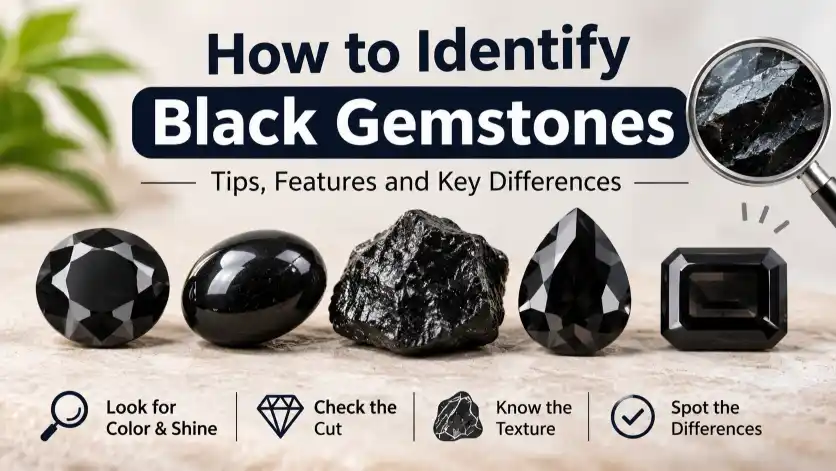
Black gemstones can look similar, so identifying them correctly can be difficult. Their luster, hardness, weight, transparency, and natural patterns can provide useful clues.
- Check the shine: Obsidian and black onyx can have a glassy or polished appearance.
- Look for metallic luster: Hematite often has a metallic shine.
- Observe colorful flashes: Black opal and labradorite may show color under changing light.
- Check the texture: Black tourmaline may have visible lengthwise grooves.
- Notice the weight: Jet is much lighter than many mineral gemstones.
- Look for patterns: Snowflake obsidian has pale, snowflake-like markings.
- Seek professional testing: A qualified gemologist can use appropriate tests to identify a stone accurately.
Avoid using scratches, chemicals, or heat to test a gemstone at home. These methods can damage valuable stones.
Tips for Choosing the Best Black Gemstone
The right black gemstone depends on your style, budget, and intended use. Consider these points before purchasing one.
- Think about durability: Choose sapphire, diamond, or spinel for jewelry that receives regular wear.
- Choose your finish: Decide if you prefer a glossy, metallic, matte, or iridescent appearance.
- Check authenticity: Ask for reliable identification and treatment information.
- Consider your budget: Black gemstones vary widely in price depending on rarity, quality, and origin.
- Match the jewelry setting: Black stones look striking with yellow gold, white gold, platinum, and silver.
- Ask about treatments: Some black onyx and other dark gemstones may be dyed or enhanced.
- Buy from a trusted seller: Request clear details about the stone’s identity and any treatments.
Frequently Asked Questions About Black Gemstones
1. What are the most popular black gemstones?
Popular black gemstones include black onyx, black obsidian, black tourmaline, black diamond, black spinel, black sapphire, black opal, and black agate.
2. What is the rarest black gemstone?
Nuummite is considered an uncommon and distinctive collector material. Fine black opals and certain star gemstones can also be rare and valuable, depending on quality.
3. Which black gemstone is best for everyday jewelry?
Black diamond, black sapphire, and black spinel are strong choices for everyday jewelry because they have good hardness and durability.
4. Are black gemstones natural?
Yes. Many black gemstones occur naturally, including obsidian, tourmaline, sapphire, spinel, diamond, hematite, and jet. However, some commercial black stones may be dyed, treated, or manufactured.
5. What is the difference between black onyx and black obsidian?
Black onyx is a form of chalcedony, while black obsidian is natural volcanic glass. Both can have a glossy black appearance, but they form through different geological processes.
6. Are black diamonds real diamonds?
Yes. Natural black diamonds are genuine diamonds. Their dark appearance is commonly caused by numerous inclusions. Some black diamonds are also treated to create or improve their color.
7. Which black gemstone has colorful flashes?
Black opal is famous for its colorful play-of-color. Black labradorite and nuummite can also display attractive flashes under suitable lighting.
8. What does a black gemstone symbolize?
Black gemstones are often associated with strength, protection, grounding, mystery, and confidence. These meanings come from cultural traditions and modern symbolism, not scientific evidence.
9. Is black tourmaline a valuable gemstone?
Black tourmaline is widely available compared with many rare gemstones. Its value depends on size, quality, finish, and if it is suitable for jewelry or collecting.
10. Can black gemstones be used in engagement rings?
Yes. Black diamonds, sapphires, and spinels are popular choices for modern engagement rings. Softer stones such as jet and some opals need extra care.
Conclusion
Black gemstones offer a beautiful combination of elegance, mystery, and natural variety. From classic black onyx and obsidian to rare nuummite and colorful black opal, each stone has its own unique appearance.
If you want a durable gemstone for everyday jewelry, consider black diamond, black sapphire, or black spinel. For unusual patterns and natural beauty, explore black opal, labradorite, and nuummite. Always check a gemstone’s identity and treatment history before buying.
Read more about!
- Female Necromancer Names: 200+ Magical, and Mysterious Ideas
- Southern Baby Girl Names: 200+ Sweet, Classic,and Beautiful Idea
- Gender Neutral Cat Names: 200+ Cute, Unique, and Unisex Idea

I’m Noah Wilson, a name enthusiast and writer at NamesProx. I enjoy researching and sharing creative, meaningful, and unique name ideas, from baby and pet names to character, fantasy, cultural, and business names. My goal is to make finding the perfect name simple, enjoyable, and useful for everyone.