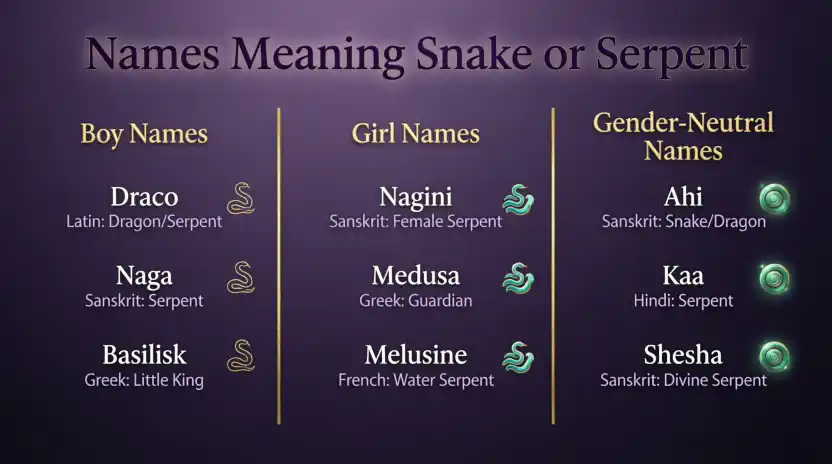
Names meaning snake often come from ancient languages, mythology, and traditional words for serpents. Some are literal words for “snake” or “serpent,” while others are names of famous mythical snakes or serpent beings. The clearest examples include Ahi, Orm, Naga, Ophion, Draco, and Hydra.
This guide separates direct snake meanings from names that have a strong mythological or cultural connection to serpents.
Names That Literally Mean Snake or Serpent
Some names have a direct connection to the word “snake” in their original language. These are useful choices if you want a name whose meaning is closely tied to a serpent rather than only to snake symbolism.
| Name | Meaning | Origin | Type |
| Ahi | Snake, serpent | Sanskrit | Direct meaning |
| Orm | Snake, serpent | Old Norse | Direct meaning |
| Naga | Snake, serpent | Sanskrit | Direct meaning |
| Ophion | Serpent | Ancient Greek | Mythological |
| Draco | Dragon, serpent | Greek/Latin | Serpent-related |
| Hydra | Water serpent | Ancient Greek | Mythological |
| Hydrus | Water serpent | Greek/Latin | Mythological |
| Vasuki | Serpent figure | Sanskrit tradition | Mythological |
Ahi
Ahi is one of the strongest choices for a name meaning snake because the Sanskrit word áhi directly means “snake” or “serpent.” It appears in ancient Vedic literature, including the Rigveda.
The name is short, distinctive, and has a very old linguistic history. In Sanskrit sources, ahi can also refer to particular serpent figures, so its meaning can extend beyond an ordinary snake.
Orm
Orm is an Old Norse word meaning “snake,” “worm,” or “dragon.” It was also used as a personal name in Scandinavia and became an Anglo-Saxon personal name during the Danelaw period.
Orm is especially interesting for people looking for a short Norse-inspired name with a direct serpent connection.
Naga
Naga comes from Sanskrit and is closely associated with snakes and serpent beings. In Indian traditions, nāgas are supernatural beings represented with serpent characteristics. Sanskrit sources also identify major nāga figures such as Shesha and Vasuki.
Because of its cultural and religious associations, Naga is more than simply a modern word for a snake.
Greek Names Connected With Snakes

Ancient Greek provides several names and words with strong serpent associations.
Ophion
Ophion is an Ancient Greek mythological name translated as “serpent.” In Greek mythology, Ophion is described in some traditions as a primordial serpent figure.
The name is especially suitable for a fantasy character, mythology-inspired name, or someone looking for an unusual ancient Greek choice.
Draco
Draco comes from the Greek name Drakon, meaning “dragon” or “serpent.” The ancient Greek drakōn could refer to a large serpent, which makes Draco more directly snake-related than the modern English meaning of “dragon” might suggest.
Draco was also the name of a historical Athenian lawgiver from the 7th century BCE.
Hydra
Hydra comes from Greek Hydra, related to hydros, meaning “water-snake.” In Greek mythology, the Hydra is the many-headed water serpent associated with Heracles.
Hydra works particularly well as a mythological, fantasy, or powerful character name.
Hydrus
Hydrus is connected to the Greek word hydros, meaning “water-snake.” It later became the name of a constellation.
It offers a less common alternative to Hydra while keeping the same ancient water-serpent connection.
Sanskrit Names Related to Serpents
Vasuki
Vasuki is the name of a major nāga, or serpent being, in Hindu mythology. Sanskrit sources connect Vasuki with the serpent tradition and identify him among the important nāgas.
Vasuki is a good option when you want a name with a strong mythological serpent identity rather than a simple dictionary meaning.
Nagendra
Nagendra is associated with the idea of a lord or king of snakes. It combines nāga, connected with serpent beings, with Indra, a title associated with lordship or rulership.
This makes Nagendra more specific than a name that simply means “snake.”
Mythological Names Associated With Snakes
Some names should not be described as literal translations of “snake.” Instead, they belong to stories involving serpents.
Python
Python is the name of a legendary serpent in Greek mythology. It is therefore best described as a serpent-related mythological name, rather than claiming that the word literally translates as “snake.”
Ophidia
Ophidia has a direct linguistic connection to Greek serpent terminology. The taxonomic term comes from Ancient Greek ophídion, meaning “small snake.”
However, Ophidia is primarily a scientific or taxonomic term, not a traditional personal name. That distinction matters if you are choosing a name for a baby, character, pet, or creative project.
Names With a Strong Serpent Theme

If you want a name that feels snake-inspired but does not need to literally mean “snake,” these options can broaden your choices:
- Ahi — direct Sanskrit word for snake.
- Orm — Old Norse snake or serpent.
- Naga — Sanskrit serpent being.
- Ophion — Greek mythological serpent.
- Draco — Greek name connected with serpents and dragons.
- Hydra — Greek water serpent.
- Hydrus — water-serpent term from Greek tradition.
- Vasuki — important nāga figure.
- Python — legendary Greek serpent.
- Ophidia — term derived from Greek for a small snake.
The key difference is that Ahi and Orm have especially direct lexical meanings, while names such as Python and Vasuki are better understood through mythology and cultural tradition.
Choosing the Right Name Meaning Snake
The best choice depends on what kind of name you need.
For a Short Name
Consider Ahi or Orm. Both are compact and have direct snake-related meanings. Ahi comes from Sanskrit, while Orm has Old Norse roots.
For a Mythological Name
Ophion, Hydra, Python, and Vasuki offer stronger connections to legendary serpent figures.
For a Fantasy Character
Draco, Ophion, Hydra, and Vasuki can create a dramatic ancient or mythical feel.
For a Sanskrit-Inspired Choice
Ahi and Naga are especially relevant because their serpent associations come from Sanskrit vocabulary and traditions.
For a Rare and Unusual Name
Orm, Ophion, and Hydrus are less familiar choices than common modern names and can give a character, pet, or creative project a distinctive identity.
What Is the Most Direct Name Meaning Snake?
Ahi is one of the most direct choices because the Sanskrit word áhi means “snake” or “serpent.” Orm is another direct option, with the Old Norse word meaning “snake,” “worm,” or “dragon.” Naga also has a strong Sanskrit serpent connection.
Are These Names Literally “Snake”?
Not all of them. Ahi and Orm have especially direct meanings connected to the ordinary word for snake. Ophion means or represents a serpent in Greek mythology, while Hydra, Python, and Vasuki are names tied to specific mythological serpent figures or traditions.
This distinction is useful because many online name lists mix literal translations with symbolic or mythological associations.
Frequently Asked Questions
1. What name means snake?
Ahi is a strong example because the Sanskrit word áhi means “snake” or “serpent.” Orm is another direct choice from Old Norse.
2. What Greek name means serpent?
Ophion is a Greek mythological name translated as “serpent.” Draco comes from Greek Drakon, meaning “dragon” or “serpent.”
3. What Sanskrit name means snake?
Ahi is a direct Sanskrit word for snake or serpent. Naga is also strongly associated with snakes and supernatural serpent beings in Sanskrit tradition.
4. What name means water snake?
Hydra is derived from Greek hydros, meaning “water-snake,” while Hydrus is also connected with the Greek term for a water serpent.
5. Is Draco a name meaning snake?
Draco comes from Greek Drakon, meaning “dragon” or “serpent.” Ancient Greek drakōn could refer to a large serpent, so Draco has a genuine serpent-related etymology.
6. Is Naga a name for a snake?
Yes. Naga is closely associated with serpent beings in Sanskrit tradition. Nāgas are traditionally depicted as supernatural beings with serpent characteristics.
7. What is a good rare name meaning snake?
Orm, Ahi, Ophion, and Hydrus are distinctive choices. Orm and Ahi have particularly direct linguistic connections to snakes.
8. What is the difference between a snake name and a name meaning snake?
A name meaning snake has a direct linguistic meaning connected to snake or serpent. A snake-related name may instead refer to a mythological serpent, serpent deity, dragon, or cultural tradition.
Conclusion
Names meaning snake come from several ancient language and cultural traditions. Ahi and Orm are among the clearest choices when you want a direct meaning of snake or serpent. Naga, Ophion, Draco, Hydra, Python, and Vasuki offer broader mythological and cultural connections.
When choosing one, decide if you want a literal meaning, ancient-language origin, or mythological serpent connection. That small distinction can help you find a name that fits your exact purpose.
Read more about!
- Cute Calico Cat Names: Adorable Ideas for Your Colorful Cat
- White Animal Names: 100+ Beautiful Ideas for White Animals
- Ranch Dog Names Girl: 150 +Sweet, and Country-Inspired Ideas

I’m Noah Wilson, a name enthusiast and writer at NamesProx. I enjoy researching and sharing creative, meaningful, and unique name ideas, from baby and pet names to character, fantasy, cultural, and business names. My goal is to make finding the perfect name simple, enjoyable, and useful for everyone.