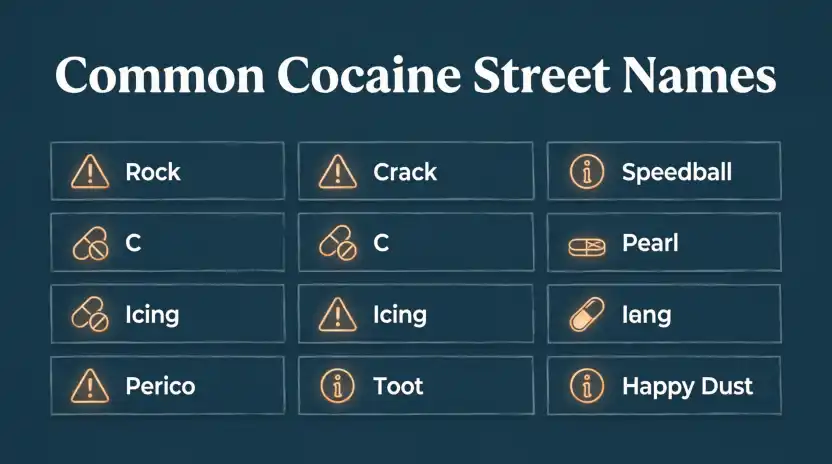
Cocaine has several street names, including coke, blow, snow, flake, and crack. These terms appear in conversations, music, movies, and news reports.
Some names refer to cocaine in general. Others describe a particular form or vary by region. This guide explains common cocaine names, their meanings, and the differences between them in simple language.
Common Cocaine Names
Cocaine is known by several informal names. The terms below appear in drug-education materials and English-language references.
- Coke: A widely recognized informal name for cocaine.
- Blow: A common slang term for cocaine.
- Snow: A nickname associated with the white powder form.
- Flake: An informal name linked to powdered cocaine.
- C: A shortened slang term for cocaine.
- Coca: A term derived from the coca plant.
- Charlie: A slang name documented in drug references.
- Nose candy: An informal expression found in English-language slang references.
- White lady: An older slang expression for cocaine.
- White dust: A term found in some drug terminology references.
Street names are informal, not scientific. Their meanings can change between communities, and some terms have other meanings outside drug-related conversations.
Cocaine Names by Type
Cocaine is commonly discussed in two forms: powdered cocaine hydrochloride and crack cocaine, a form of cocaine base.
The terms associated with each form may overlap.
Powdered Cocaine Names
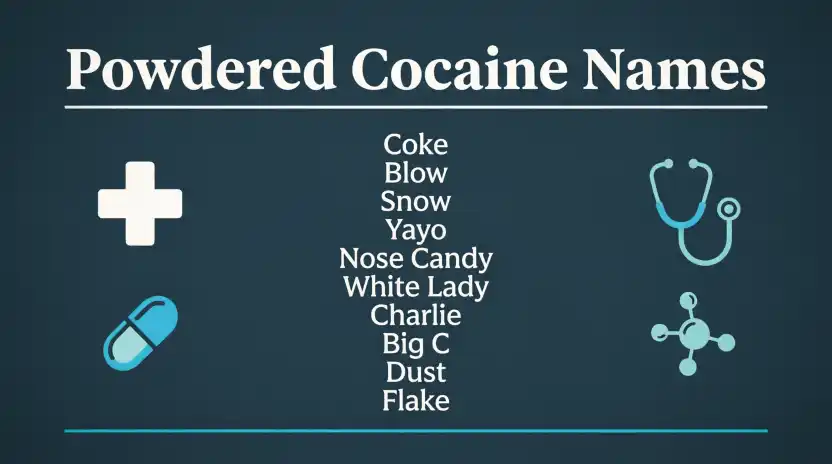
Powdered cocaine is often associated with these names:
- Coke
- Blow
- Snow
- Flake
- Powder
- C
These terms do not confirm that a substance is cocaine. Other substances may look similar, and street products may contain unknown ingredients.
Crack Cocaine Names
Crack is a smokable form of cocaine base. The following terms are associated with it:
- Crack
- Rock
- Base
The word “rock” generally refers to the solid form, while “crack” refers to the smokable form of cocaine base.
These terms are not reliable chemical descriptions. A street name cannot establish a substance’s contents or strength.
Cocaine Slang in Different Contexts
Cocaine slang varies across countries, languages, communities, and generations. A term used in one place may be unfamiliar or have a different meaning somewhere else.
Names Used in Everyday English
Some cocaine-related expressions appear in English-language conversations, music, movies, and news reports.
- Coke
- Blow
- Snow
- Charlie
- Flake
These are informal expressions. They are not medical or scientific names.
Names Used in Spanish-Language Contexts
“Coca” and “perico” are terms documented in some Spanish-language drug references.
Their use varies by country and community. Not every Spanish speaker uses these words, and context is important when interpreting them.
Older and Less Common Terms
Some terms appear in older publications and drug-reference materials.
- Nose candy
- White lady
- White dust
These expressions may be unfamiliar today. Their current use is not established across all regions.
Cocaine Names and Their Meanings
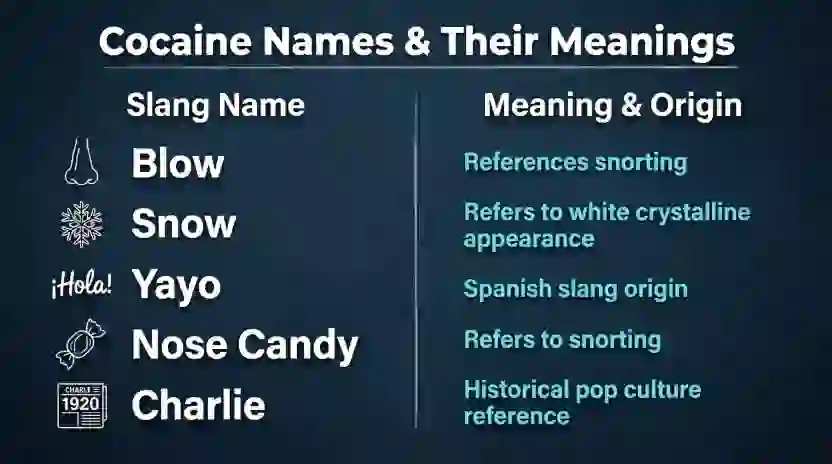
Understanding the difference between a street name and a scientific term can help readers interpret drug-related information.
- Cocaine: A stimulant substance originally derived from coca leaves.
- Coke: An informal abbreviation for cocaine.
- Snow: A nickname associated with the powder’s appearance.
- Crack: A smokable form of cocaine base.
- Rock: A slang term often associated with crack cocaine.
- Coca: The name of the plant from which cocaine is produced.
Coca leaves and purified cocaine are not the same thing. Coca leaves have a long history of traditional use in parts of South America. Purified cocaine is a powerful stimulant that can cause serious health problems and addiction.
A street name does not establish the chemical composition, purity, or safety of a substance.
Are Cocaine Street Names the Same Everywhere?
No. Cocaine slang differs across regions, languages, and social settings.
Three factors can affect how a term is understood:
- Location: Different communities may use different words for the same substance.
- Time: Older slang may disappear, while new expressions emerge.
- Context: A word in a song, text message, or conversation may not refer to cocaine at all.
For this reason, no list can include every current slang term or explain how every community uses it.
Health Risks and Safety Information
Knowing cocaine’s street names does not make the substance safe. Cocaine is a powerful stimulant that affects the brain, heart, and blood vessels.
Possible health risks include:
- Increased heart rate and blood pressure.
- Anxiety, agitation, and paranoia.
- Irregular heartbeat and heart attack.
- Seizures and stroke.
- Dependence and addiction.
Cocaine sold on the street may contain other substances. Its appearance, packaging, smell, or street name cannot establish its purity or safety.
If someone experiences chest pain, seizures, difficulty breathing, or becomes unresponsive after suspected cocaine use, seek emergency medical help immediately.
Frequently Asked Questions
1. What are the most common names for cocaine?
Coke, blow, snow, flake, and C are among the commonly documented slang names for cocaine. Crack is the name of a smokable form of cocaine.
2. Why is cocaine called snow?
“Snow” is an informal nickname associated with the white, powder-like appearance of cocaine. The name does not confirm what a substance contains.
3. Is crack the same as cocaine?
Crack is a form of cocaine. Powdered cocaine hydrochloride and crack cocaine base differ in their chemical form and typical method of use. Both can cause serious harm and addiction.
4. What does C mean in drug slang?
“C” is a shortened informal term for cocaine. It is used in some drug-related conversations and references.
5. Does cocaine have different names in different countries?
Yes. Slang varies by language, region, and community. Terms such as “coca” and “perico” appear in some Spanish-language contexts, while other expressions are more common in English-language references.
6. Can you identify cocaine by its street name?
No. A street name cannot confirm a substance’s chemical identity, purity, or contents. Some substances sold under familiar names may contain unexpected ingredients.
Conclusion
Cocaine has many documented street names, including coke, blow, snow, flake, Charlie, and crack. Some terms refer to cocaine generally, while others are associated with a particular form or local slang.
The meanings of these terms can change across regions and over time. Understanding their context helps readers interpret conversations, educational materials, and news reports.
Read more about!
- Trans Boy Names: 200+ Masculine, Unique, and Meaningful Ideas
- Unique J Names for Girls: Beautiful, Rare, and Modern Ideas
- Beautiful Viking Girl Names: Strong, Elegant, and Norse-Inspired Choices

I’m Noah Wilson, a name enthusiast and writer at NamesProx. I enjoy researching and sharing creative, meaningful, and unique name ideas, from baby and pet names to character, fantasy, cultural, and business names. My goal is to make finding the perfect name simple, enjoyable, and useful for everyone.