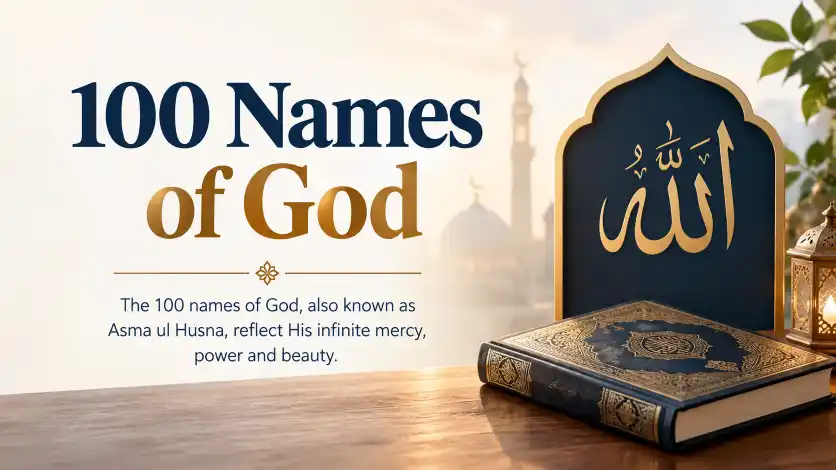
The names of God hold deep meaning across religions and spiritual traditions. They express qualities such as love, mercy, wisdom, strength, justice, and creation. Some names appear in sacred scriptures, while others are titles that describe the nature of the divine.
If you are searching for the 100 names of God, this guide explores names and titles from Christianity, Islam, Judaism, and Hinduism. Each tradition has its own beliefs and sacred language, so the meanings below are explained within their respective contexts.
20 Names of God in Christianity
Christianity uses many biblical names and titles to describe God’s power, love, holiness, and relationship with humanity.
- God — The supreme divine being.
- Lord — A title of authority and reverence.
- Heavenly Father — Emphasizes God’s loving relationship with believers.
- Creator — The one who created the universe.
- Almighty God — Expresses divine power.
- Emmanuel — Means “God with us.”
- Yahweh — A common scholarly rendering of the Hebrew divine name YHWH.
- Jehovah — A traditional English form associated with YHWH.
- El Shaddai — Traditionally translated as “God Almighty.”
- El Elyon — Means “God Most High.”
- El Olam — Means “Everlasting God.”
- Adonai — Hebrew for “Lord” or “my Lord.”
- Abba — An Aramaic term meaning “Father.”
- King of Kings — A title expressing supreme sovereignty.
- Lord of Lords — A title expressing ultimate authority.
- The Good Shepherd — A biblical title emphasizing care and guidance.
- The Rock — A biblical image of strength and protection.
- The Redeemer — One who rescues or delivers.
- The Most High — A title expressing divine supremacy.
- The Alpha and the Omega — A biblical title meaning the beginning and the end.
40 Names of Allah in Islam
In Islam, Allah is the one God. The 99 Beautiful Names of Allah are known as Asma ul Husna. The following names are part of the widely recognized traditional list.
- Allah — The Arabic name for God.
- Ar-Rahman — The Most Compassionate.
- Ar-Rahim — The Most Merciful.
- Al-Malik — The King or Sovereign.
- Al-Quddus — The Most Holy.
- As-Salam — The Source of Peace.
- Al-Mu’min — The Giver of Security.
- Al-Muhaymin — The Guardian and Overseer.
- Al-Aziz — The Almighty.
- Al-Jabbar — The Compeller or Restorer.
- Al-Mutakabbir — The Supremely Great.
- Al-Khaliq — The Creator.
- Al-Bari — The Originator.
- Al-Musawwir — The Fashioner.
- Al-Ghaffar — The Great Forgiver.
- Al-Qahhar — The All-Subduing.
- Al-Wahhab — The Bestower.
- Ar-Razzaq — The Provider.
- Al-Fattah — The Opener.
- Al-Alim — The All-Knowing.
- Al-Qabid — The Withholder.
- Al-Basit — The Expander.
- Al-Khafid — The One Who Lowers.
- Ar-Rafi — The One Who Raises.
- Al-Mu’izz — The Giver of Honor.
- Al-Mudhill — The One Who Humbles.
- As-Sami — The All-Hearing.
- Al-Basir — The All-Seeing.
- Al-Hakam — The Judge.
- Al-Adl — The Utterly Just.
- Al-Latif — The Most Subtle and Kind.
- Al-Khabir — The All-Aware.
- Al-Halim — The Most Forbearing.
- Al-Azim — The Magnificent.
- Al-Ghafur — The Most Forgiving.
- Ash-Shakur — The Most Appreciative.
- Al-Aliyy — The Most High.
- Al-Kabir — The Most Great.
- Al-Hafiz — The Preserver.
- Al-Muqit — The Sustainer.
10 Names and Titles of God in Judaism

Jewish tradition uses several Hebrew names and titles for God. Some are treated with special reverence in worship and religious practice.
- YHWH — The four-letter divine name in the Hebrew Bible.
- Elohim — A Hebrew term for God.
- El — A Hebrew word meaning God.
- Adonai — “Lord” or “my Lord.”
- Ehyeh-Asher-Ehyeh — Often translated as “I Am Who I Am” or “I Will Be What I Will Be.”
- El Roi — Traditionally translated as “God who sees me.”
- El Elyon — “God Most High.”
- El Olam — “Everlasting God.”
- El Shaddai — Traditionally translated as “God Almighty.”
- Tzur — “Rock,” a title expressing strength and protection.
15 Names and Titles of the Divine in Hinduism
Hindu traditions include diverse understandings of the divine. Some names describe ultimate reality, while others refer to particular deities.
- Brahman — The ultimate reality in many Hindu philosophical traditions.
- Brahma — The creator deity in the Hindu Trimurti.
- Vishnu — A deity associated with preservation and protection.
- Shiva — A deity associated with transformation and dissolution.
- Krishna — A major Hindu deity and an avatar of Vishnu in many traditions.
- Rama — A revered avatar of Vishnu.
- Ishvara — The Lord or supreme divine being in some Hindu schools.
- Bhagavan — A title meaning the Lord or Blessed One.
- Narayana — A name associated with Vishnu.
- Mahadeva — “Great God,” commonly used for Shiva.
- Jagannath — “Lord of the Universe,” a title associated with Krishna or Vishnu.
- Govinda — A name associated with Krishna and Vishnu.
- Hari — A name associated with Vishnu and Krishna.
- Paramatma — The Supreme Self in several Hindu traditions.
- Sat-Chit-Ananda — “Being, consciousness, and bliss,” a description of ultimate reality in some Hindu philosophies.
How to Understand the Names of God
Names of God reflect the language, scripture, and beliefs of the tradition in which they appear.
- Christianity: Biblical titles often describe God’s relationship with believers, divine authority, and salvation.
- Islam: The 99 Beautiful Names of Allah describe divine attributes such as mercy, knowledge, justice, and power.
- Judaism: Hebrew names and titles are connected to scripture, worship, and longstanding religious customs.
- Hinduism: Names may refer to ultimate reality, a supreme divine being, or particular deities.
Not every title is a personal name, and not every tradition understands God in the same way. Keeping these differences clear helps readers appreciate the meaning of each name.
Frequently Asked Questions About the 100 Names of God
1. What are the 100 names of God?
There is no single universal list of 100 names accepted by all religions. Different traditions use their own sacred names and titles. This guide presents 100 entries from Christianity, Islam, Judaism, and Hinduism.
2. What are the 99 names of God in Islam?
The 99 Names of Allah are called Asma ul Husna, meaning “the Most Beautiful Names.” Examples include Ar-Rahman, Ar-Rahim, Al-Malik, Al-Khaliq, and Al-Alim.
3. What is God’s name in the Bible?
The Hebrew Bible contains the divine name YHWH. Yahweh is a common scholarly rendering, while many English translations use “LORD.”
4. Is Allah another name for God?
Allah is the Arabic word for God. Arabic-speaking Christians also use this word when referring to God. Islamic and Christian beliefs about God’s nature differ in important ways.
5. What does El Shaddai mean?
El Shaddai is traditionally translated as “God Almighty,” although scholars have proposed different explanations for its original meaning.
6. Are the names of God the same in every religion?
No. Each religion has its own beliefs, scriptures, and ways of describing the divine. Some names are titles, some are sacred names, and others refer to particular deities or philosophical concepts.
7. Why does God have so many names?
Names and titles express different divine qualities, including compassion, wisdom, justice, power, protection, and creation. They also reflect the history and language of each religious tradition.
8. Which name of God means Creator?
Al-Khaliq means “The Creator” in Islamic tradition. Creator is also a common title for God in Christian and Jewish contexts.
Conclusion
The names of God reflect the rich diversity of religious and spiritual traditions. Names such as Allah, Yahweh, Elohim, Brahman, and Ishvara carry distinct histories and meanings. Other titles, including Creator, Almighty, and Most Merciful, describe qualities associated with the divine.
Learning these names can help readers understand different faiths and their sacred traditions. Each name deserves to be understood in its original context and treated with respect.
Read more about!
- Western Girl Dog Names: 200+ Cute, Country, and Cowgirl Names
- Scary Girl Names: 200+ Creepy, Dark, and Spooky Ideas
- Female Horse Names: 200+ Beautiful, Cute, and Powerful Ideas

I’m Noah Wilson, a name enthusiast and writer at NamesProx. I enjoy researching and sharing creative, meaningful, and unique name ideas, from baby and pet names to character, fantasy, cultural, and business names. My goal is to make finding the perfect name simple, enjoyable, and useful for everyone.